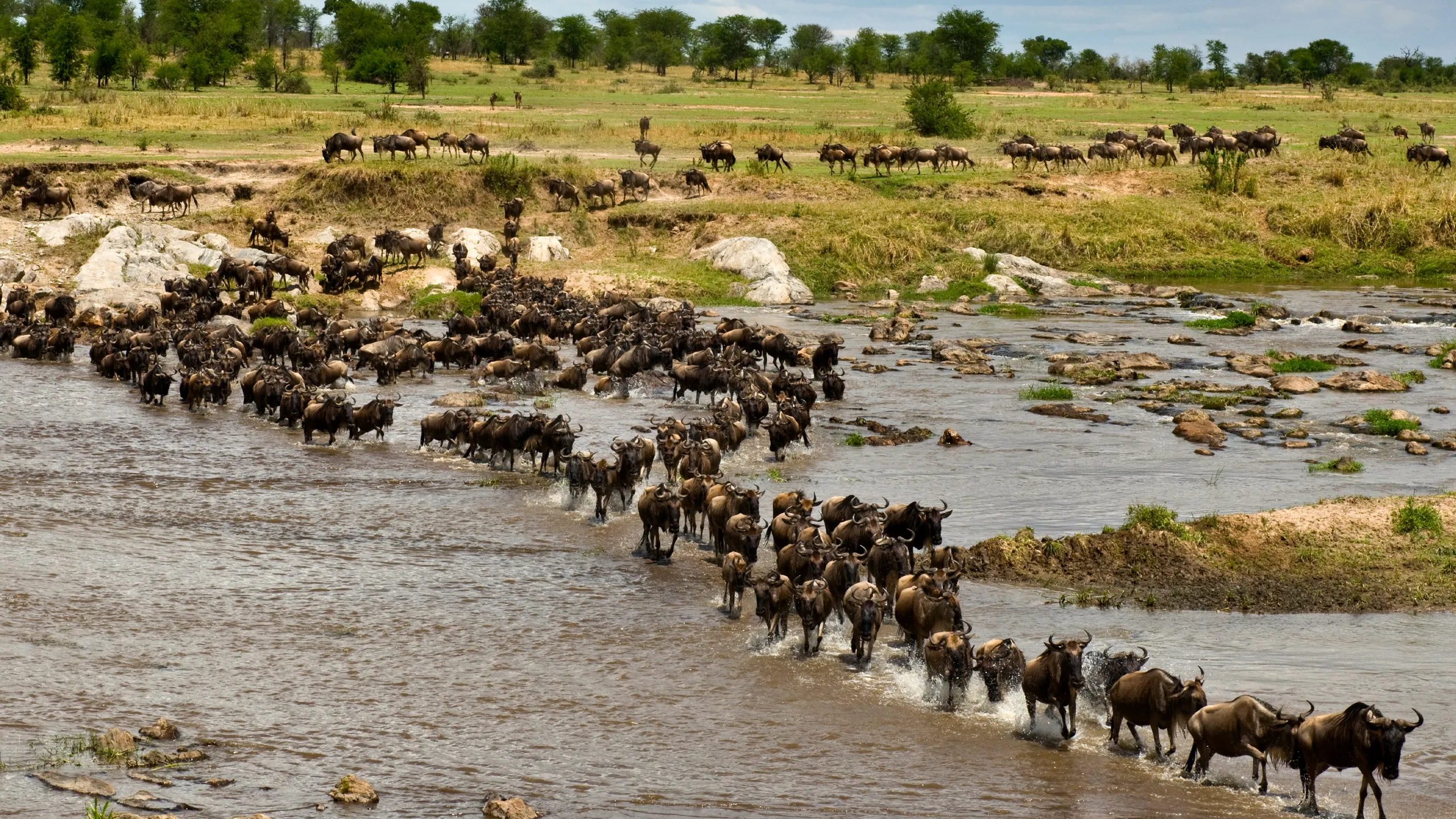
The best time to visit East Africa for a safari is the dry season, June through October, when wildlife concentrates around rivers and waterholes and visibility across the plains is at its clearest. The Great Wildebeest Migration typically reaches Kenya's Masai Mara from July to October, making this the single most popular — and most booked-out — window of the year. January and February form a strong second option, coinciding with the migration's calving season on the southern Serengeti plains.
Why Is June–October the Best Time for an East Africa Safari?
Across Kenya and Tanzania, the long dry season brings thinning vegetation, reliable game viewing, and dependable weather. This is when the Great Migration crosses the Mara River into the Masai Mara, and when most of East Africa's parks are at their busiest. Book accommodation at least 3–6 months ahead for travel in this window.
What Happens During the January–February Calving Season?
Over a million wildebeest calve on the short-grass plains of the southern Serengeti and Ndutu area in a matter of weeks, drawing predators in close for some of the most dramatic wildlife action of the year. Skies are clearer than during the November–December short rains, and parks are noticeably quieter than in the July–October peak.
When Is the Best Time for Gorilla Trekking?
Uganda and Rwanda don't follow the same migration-driven calendar. Gorilla trekking is possible year-round, but June–September and December–February are the driest months, meaning firmer, easier trails through Bwindi Impenetrable Forest and Volcanoes National Park.
What's the Best Time to Visit Each East Africa Destination?
- Kenya: June–October (Great Migration, dry season); January–February also excellent
- Tanzania: June–October for safaris; January–March for the Serengeti calving season
- Uganda: June–August and December–February (driest trekking conditions)
- Rwanda: June–September and December–February
- South Africa: May–September for Kruger safaris; October–March for the Cape coast
- Botswana: May–October, dry season
- Zambia: July–October for walking safaris; May–August for the fullest Victoria Falls
- Zimbabwe: May–October
How Far in Advance Should I Book for Peak Season?
Camps and lodges in the most popular parks fill up months in advance for July–October and the December holiday period. If your travel dates are flexible, shoulder-season travel (November, or March–April outside the long rains) can mean better availability and lower rates, with wildlife viewing still very good in most parks.
Not sure which window suits your trip? Tell us your travel dates and we'll match them to the destinations and parks that make the most sense.